Indonesia
 English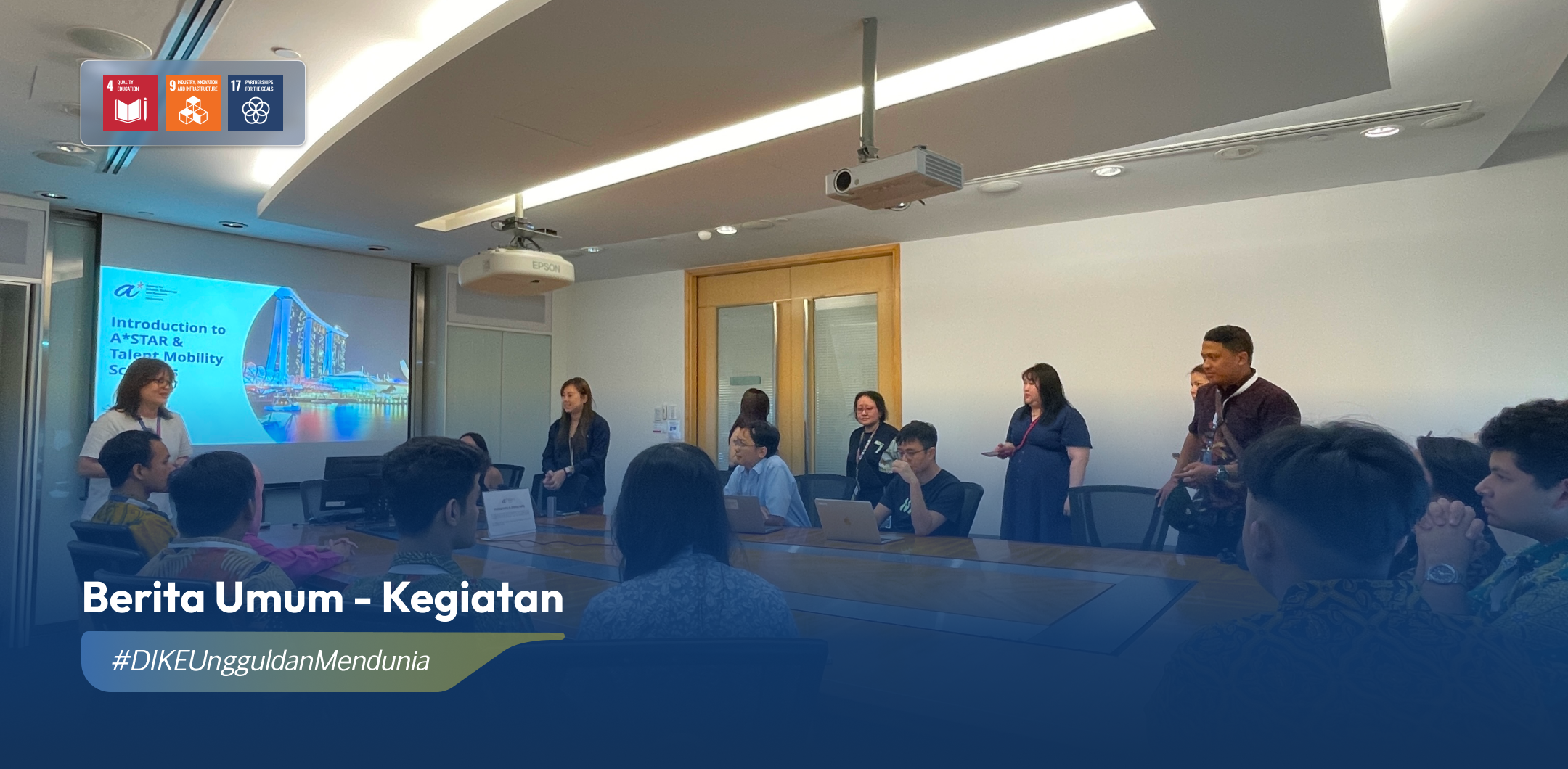
Singapore, 28 July 2026 – Students of the Department of Computer Science and Electronics (DCSE), Faculty of Mathematics and Natural Sciences, Universitas Gadjah Mada, conducted an academic visit to the A*STAR Institute of Advanced Intelligence and Computing (IAIC) in Singapore. The visit formed part of the International Mobility Program (IMP) 2026 and was aimed at examining research practices in artificial intelligence and robotics within one of Asia’s leading research ecosystems.
IMP 2026 was held from 27 to 30 July 2026 in Singapore and Malaysia under the theme “Connecting Academia with Professionals in Singapore and Malaysia”. The delegation departed from Yogyakarta International Airport for Changi Airport on 27 July 2026. Across four days, the program covered academic visits and industry exposure at Nanyang Technological University (NTU), ASTAR IAIC, Taylor’s University, and Nintex Software Malaysia. PT Gistrav OnTrip Asia facilitated the program through its Gotravindo Educational Travel service. The visit to ASTAR IAIC was the second institutional agenda on 28 July 2026, following the visit to NTU on the same day. A*STAR, the Agency for Science, Technology and Research, is the principal public research agency of Singapore. The Institute of Advanced Intelligence and Computing operates under the agency, with a research focus on artificial intelligence and advanced computing, including High Performance Computing and AI-based robotic systems. In its presentation, the institute outlined its research outcomes through high-impact publications, participation in national programs, and a portfolio of robots developed in collaboration with partners.

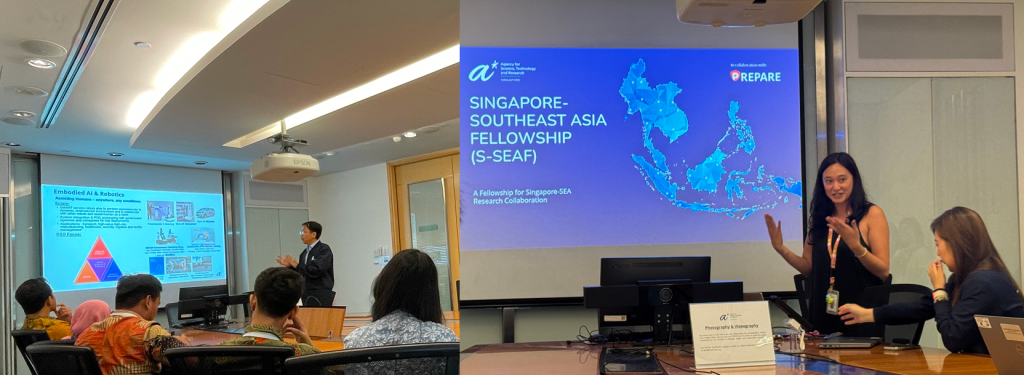
The visit opened with a session titled “Introduction to ASTAR and Talent Mobility Schemes”, delivered by Ashlyn Tan, Manager of the ASTAR Graduate Academy. The session described how the agency develops research talent through structured mobility schemes, including graduate pathways and fellowship programs. One scheme presented in greater detail was the Singapore-Southeast Asia Fellowship (S-SEAF), a fellowship designed to support research collaboration between Singapore and Southeast Asian countries, complemented by materials outlining the benefits available to fellows and the regional research community. The session continued with a technical presentation on recent developments in High Performance Computing (HPC) and Embodied AI. Researchers at the institute described how high-performance computing supports large-scale simulation and modeling, and how artificial intelligence is embedded in physical systems that operate in real-world environments. One research example presented was the development of a safe autonomous transporter, covering its research objectives, key challenges, multimodal navigation, and the machine learning approaches applied within the system.
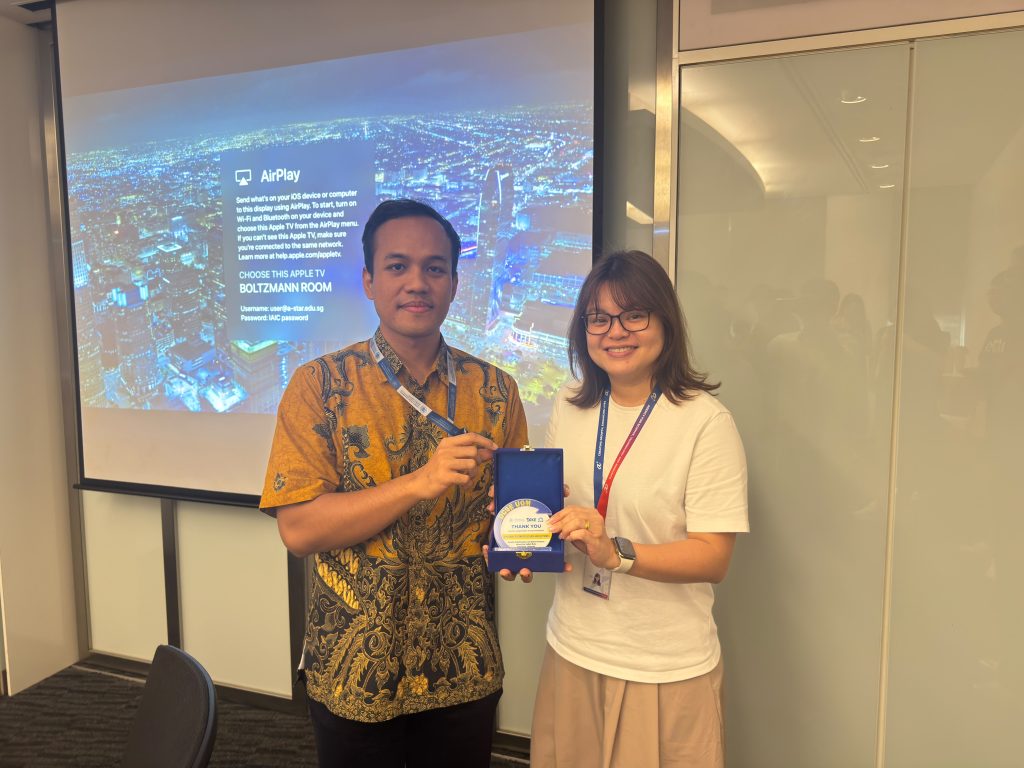
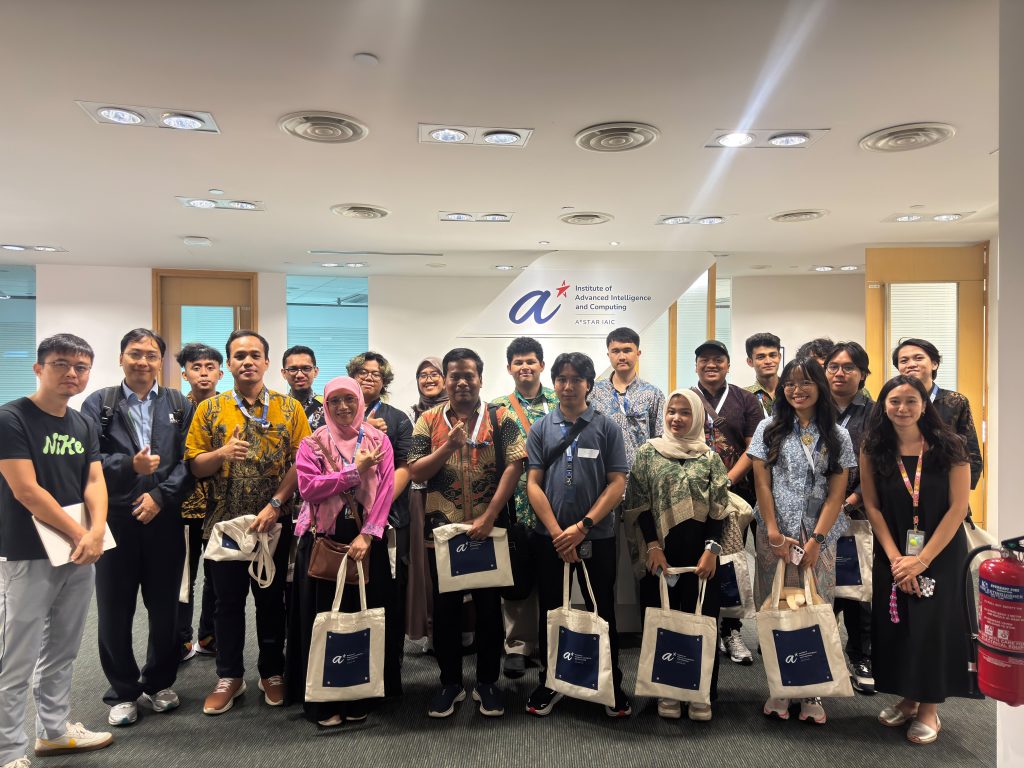
After the presentation sessions concluded, a plaque was presented by Oskar Natan, S.ST., M.Tr.T., Ph.D., as the representative of DCSE UGM, to the representative of A*STAR IAIC, followed by a group photograph of all participants. The exchange marked an initial institutional contact between the two parties and opened the possibility of further academic communication. The final agenda item was an observation session at the institute’s robotics laboratory. In the laboratory, students observed the intelligent robotic systems under development, including mobile robot platforms and sensor devices in the testing stage, together with explanations of their applications across a range of sectors. The session gave participants a concrete picture of how research infrastructure, engineering teams, and testing processes operate within an established research institution.
The visit reflects DCSE UGM’s efforts to broaden students’ academic exposure to international research practices while strengthening their capacity in artificial intelligence and robotics. Such exposure supports SDG 4 (Quality Education) through access to knowledge and international study pathways, and SDG 9 (Industry, Innovation, and Infrastructure) through an understanding of advanced computing research and intelligent robotic systems. The institutional contact established during the visit, together with the fellowship schemes introduced to participants, also contributes to SDG 17 (Partnerships for the Goals) by strengthening research networks between Indonesia and Singapore. Through the International Mobility Program (IMP) 2026, DCSE UGM continues to strengthen students’ academic experience, research awareness, and international networks through exposure to global research and innovation ecosystems.
Author: Farichaturrifqi Aryanitasari
Editor: Hikmah Nursidik